The Gokyo Lakes Trek stands out from other Nepal treks primarily due to its pristine chain of high-altitude turquoise glacial lakes and the massive Ngozumpa Glacier, which create a surreal, lake-dotted alpine valley unlike the rocky base camp routes or high passes of Annapurna, Langtang, or Manaslu.
It’s an enchanting 12 day trek in Nepal to the shores of the five stunning Gokyo Lakes, and presents a moderate to strenuous challenge that is suitable for trekkers with a good fitness level.
High in the Himalayas, at elevations above 4,700 meters, lie the stunning five Gokyo Lakes, renowned for their beautiful turquoise color.
Surrounded by the world’s highest mountains and the expansive Ngozumpa Glacier, the Gokyo Lakes Trek provides breathtaking and otherworldly views.
Among these lakes, Dudh Pokhari, the third Gokyo Lake, stands out for its vibrant color and serene atmosphere.
A popular trek route among trekking enthusiasts, the Gokyo lakes Trek also offers hikers the option to extend the trek beyond the Gokyo Valley to reach Everest Base Camp.
The Gokyo Lakes Trek with a trek to the Everest Base Camp is often chosen by those who have a few extra days to spare and by those looking for a quieter experience, as the regular Everest Base Camp Trail can become quite crowded.
One of the advantages of the Gokyo Lakes Trek is its circular route, unlike the standard Everest Base Camp Trek, which requires hikers to return along the same path they took on the way in.
“Gokyo Lakes Trek: Unveiling the Majestic Beauty of the Gokyo Valley in Nepal Himalaya”
The 3rd. Gokyo Lake & the Gokyo Village
The Gokyo Lakes trek is a challenging 12-day trek in Nepal. It takes hikers through the Everest region and into the Gokyo Valley, immersing you in the pristine calmness of the five Gokyo Lakes.
If you’ve always been captivated by the Everest Range and dreamed of trekking among the tallest mountains in the world, then you should embark on the Gokyo Lakes Trek.
As you trek into the Gokyo Valley and ascend to Gokyo Ri, you will be rewarded with panoramic views of Everest, Cho Oyu, Lhotse, and Makalu, along with a forest of similarly beautiful peaks over 7000 m, creating a dramatic amphitheatre of rugged views. You will also see the Gokyo Valley down below, adorned with the glistening blue waters of the five enchanting Gokyo Lakes, each one a sight to behold.
So, whether you’re a seasoned adventurer or a newcomer to the world of trekking, the Gokyo Lakes Trek is a must-add to your to-do list in the Nepal Himalayas.
Looking back at the 2nd Gokyo Lake in the Gokyo Valley.
The allure of the Gokyo Lakes Trek extends beyond the stunning natural beauty of the Gokyo Valley, it offers breathtaking views of the tallest mountains in the world from Gokyo Ri that will leave you in awe.
Although the Gokyo Lakes Trek poses some challenges, such as steep climbs and traversing high mountain passes like the Renjo La Pass, the experience is truly rewarding.
So, challenge yourself and immerse yourself in the natural beauty of the Gokyo Valley as you embark on this unforgettable adventure trek in Nepal.
Getting Around
The Gokyo Lakes Trek begins with a quick 30-minute flight from Kathmandu or Ramechap to the quaint town of Lukla, the gateway to the Everest and Gokyo Valley.
For those seeking a more immersive experience or with additional time to spare, you can drive up to Jiri and start trekking from this small town, or you can even drive further up to Phaplu and start the trek from here.
This alternative route not only saves the cost of flight tickets but also allows you to fully embrace the stunning landscapes and local culture as you make your way towards the iconic Gokyo Valley.
View of the Gokyo Village and the Gokyo Lakes with the Nzogumpa Glacier in the Background on the Gokyo Lakes Trek from Gokyo Ri
Signature Scenic Highlights
The Gokyo Lakes Trek is one of the most beautiful trek route in the Everest region, known for its turquoise Gokyo lakes, huge glacier views, and quieter trails compared to the classic Everest Base Camp Trek. It is often chosen by trekkers who want Everest panoramas without heavy crowds.
Five high-altitude Gokyo Lakes: A chain of five sacred turquoise glacial Gokyo lakes between about 4,700–5,000 m, set below the towering Everest Range.
Gokyo Ri summit (5,370 m): A steep climb that gives one of Nepal’s finest panoramas, with Everest, Lhotse, Makalu, and Cho Oyu all in one frame, plus sweeping views of the Ngozumpa Glacier. The ascent to Gokyo Ri is challenging, and you will need all the determination and strenght against the thin air and the biting cold. But when you reach the summit of Gokyo Ri, the view that unfolds before you is worth the effort. I know you will stand in silent reverence, gazing at the dramatic amphitheater of rugged peaks.
Ngozumpa Glacier: The largest glacier in Nepal, skirted on the final approach to Gokyo Valley, with chaotic ice ridges and a surreal, lunar landscape.
Sherpa villages & monasteries: The trek route passes through Namche Bazaar, Dole, Machhermo, and into Gokyo Valley, with stone houses, small gompas, prayer flags, and mani walls offering deep immersion in Sherpa Buddhist culture.
Sagarmatha National Park: The sagarmatha National Park is a UNESCO World Heritage Site with rich biodiversity—musk deer, Himalayan tahr, pheasants, and alpine birds—plus classic high-Gokyo Valley.
Quieter than Everest Base Camp Trail: The Gokyo Lakes trek is more quiter with fewer trekkers than the Everest Base Camp Trail, giving hikers a more peaceful, contemplative experience while still sharing the same dramatic Everest skyline.
Everest from Gokyo Ri
Take a Day Hike
Once in the Gokyo Valley, take a day hike along the valley floor and discover the sacred 4th and the 5th. Gokyo lakes. Altogether, there are six lakes, and these are the highest freshwater lakes in the world.
Enjoy great views of Everest, Cho Oyu, Nuptse, Lhotse, Makalu, and a host of smaller mountains, along with the 4th. and 5th. Gokyo Lakes, especially from Ngozumba Tse, also known as Knobby View Point (5550 m), north of the 5th lake.
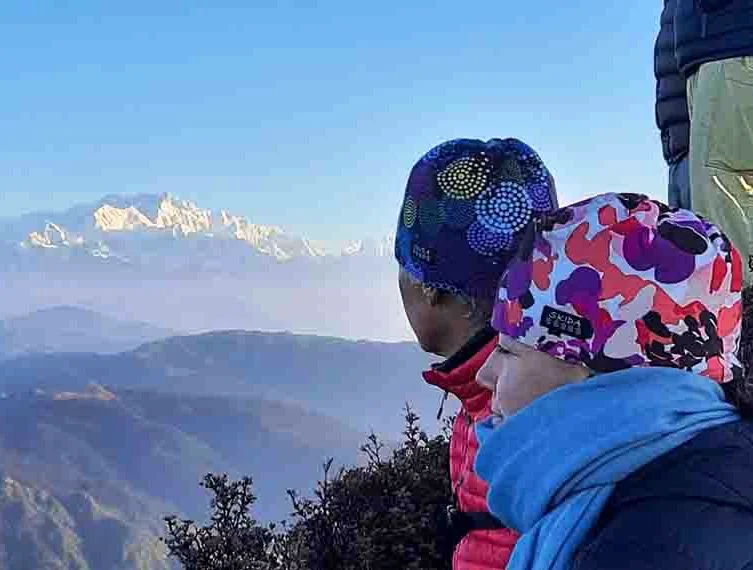
Looking down into the Gokyo Valley from Rinzula Pass with Alain Geoffrey Bates & Debbie on 26th.November 2023
The five Gokyo Lakes and their features
Situated above 4,700 meters, the Gokyo Lakes are a breathtaking chain of five glacial waters famed for their vivid turquoise hue. Encircled by majestic peaks of the Everest Range and vast Nzogumba glacier, the five Gokyo lakes form an otherworldly panorama that enchants visitors.
Among them, Dudh Pokhari stands out as the largest and most notable, celebrated for its lively color and peaceful atmosphere.
The first lake, Langponga Tsho, boasts crystal-clear turquoise waters.
The second lake, Taujung Tsho, is known for its emerald green color and is surrounded by snow-capped peaks.
Gokyo Cho, also called Dudh Pokhari, the third Gokyo lake, is the main lake with an area of 106 acres, and the Gokyo village lies on its eastern shore. The Dudh Pokhari stands out as the largest and most notable, celebrated for its lively color and peaceful atmosphere. This lake is also sacred to Hindus and Buddhists and is believed to have healing properties. It is also the second deepest lake of the five Gokyo Lakes at 43 m deep.
Thonak Cho, the fourth lake, is the largest, with an area of 160.8 acres, and is also the deepest (62.4 m) of the five Gokyo lakes. It is also equally stunning, with its mirror-like surface reflecting the surrounding mountains.
Followed by the fifth lake, Ngozumpa Cho, with an area of 35.6 acres, is the highest freshwater lake system in the world and offers a unique perspective of the Himalayas.
How long is the trek?
The Gokyo Lakes Trek is a 12 to 14-day trek in the Gokyo Valley of the Nepal, depending on your ability, offering a moderate to strenuous challenge with six to seven hours of trekking per day.
Trek Grade
The Gokyo Lakes Trek is a moderately strenuous trek in Nepal and ventures into high altitudes; it presents an ideal choice for those seeking a less crowded trail. Compared to its popular counterpart, the regular Everest Base Camp Trek, the Gokyo Trek offers a serene and less commercialized experience.
Type of Trek
This is a teahouse trek with accommodation provided in lodges run by local families, though the lodges are few and basic as compared to the lodges on the regular Everest Base Camp Trek.
Participants carry their day pack only with their personal items in it. The main baggage will be carried by the porters. The baggage of each person should not weigh more than 15 kilograms.
The Perfect Trekking Seasons
The best time of year to do the Gokyo Valley (Gokyo Lakes) Trek is spring (March–May) and autumn (September–November).
These seasons give the most stable weather, best visibility, and safest trail conditions for high-altitude trekking in the Everest and the Gokyo Valley.
Spring (March–May)
Why it’s great: Mild temperatures, long daylight hours, generally stable weather, and blooming rhododendrons and alpine flowers along the trail.
Conditions:
Lower regions: comfortably cool; higher up around Gokyo, days hover roughly between 0–10°C, nights well below freezing early in the season.
Skies are usually clear with occasional light snow in early March.
Crowds: Moderate–high in April; March and late May are a bit quieter. But this is the best time if you want flowers and good views and can tolerate some cold, especially in March–early April is the best time.
Autumn (September–November)
Why it’s often rated as the best time: Post‑monsoon air is dust‑free and crisp, giving the clearest mountain views of Everest, Cho Oyu, and the whole Gokyo Valley.
Conditions:
Lower regions: ~12–24°C daytime; higher in the Gokyo Valley, around 0–10°C in the day, nights regularly below zero.
Dry, stable weather; trails are in their best condition.
Crowds: October is peak season for the Gokyo Lakes Trek; late September and November are slightly quieter but still excellent for views. But this is the best time if you want maximum clarity for photography and summit views from Gokyo Ri with the most predictable weather.
Winter and Monsoon
Winter (Dec–Feb): Spectacularly clear but very cold; temperatures at Gokyo Valley often drop below −10°C at night with heavy snow possible, which can close sections of the trail. Suitable only for experienced trekkers prepared for harsh conditions.
Monsoon/Summer (Jun–Aug): Warm and green at lower altitudes but heavy rain, clouds, leeches, and frequent flight disruptions to Lukla; mountain views are often obscured. Generally not recommended.
In practice: Aim for late March–April or October–early November for the best balance of clear views, moderate temperatures, and manageable crowds on the Gokyo Lakes Trek.
Geography
Starting from the iconic town of Lukla, the trail heads north towards Namche Bazaar, the vibrant capital of the Khumbu. From Namche, trekkers are presented with two choices. One option is to trek towards Thame and cross over into the Gokyo Valley through the Rinzula Pass.
This route then winds through the charming villages of Gokyo, Dole, and Machermo before rejoining the main trail back to Namche Bazaar and Lukla.
This diverse and challenging trek offers trekkers the choice to choose the trail, but most hikers trek to Dole, Machermo, and to Gokyo Valley, and exit through the Rinzula Pass and back to Namche and Lukla.
With the right preparation and guidance, the Gokyo Lakes Trek is a truly unforgettable experience for any adventurous traveller.
Language
The Everest and Gokyo Valley regions of Nepal may be dominated by the Nepali language, but that shouldn’t deter adventurous travellers. While Sherpa is widely spoken in these high-altitude areas, Nepali remains the most common and widely understood dialect.
But fear not, English is also widely spoken, if not fluently, then at least enough to get by. From the porters to the lodge owners, you’ll find that locals are more than happy to help out English-speaking visitors. That said, learning a few key Nepali phrases can go a long way – words like “Namaste” (hello) and “Dhanyabad” (thank you) are sure to be appreciated.
So don’t let language barriers hold you back from exploring the breathtaking landscapes of the Everest and Gokyo Valley regions. With a little linguistic flexibility and an openness to local customs, you’re sure to have an unforgettable experience.
Accommodation
Accommodation on the Gokyo Lakes (Gokyo Valley) trek is almost entirely in local teahouses and lodges operated by local families, which are simple but comfortable enough if you come prepared for basic facilities and cold nights at altitude. Rooms are usuallytwin-sharing with wooden beds, foam mattresses, pillows, and blankets.
For those seeking a bit more comfort, select lodges in key locations like Lukla, Namche Bazaar, Gokyo Valley, and Lumdeng offer upgraded rooms with attached bathrooms and hot showers.
In Gokyo village itself, there are only a handful of lodges; all offer basic but reliable rooms, mostly twin beds with blankets and shared toilets, and a heated common dining hall.
While these premium options come at a higher cost, the added amenities can be well worth it.
The other aspect to remember on the Gokyo Trek is the limited availability of lodges after Namche Bazaar.
Dole, Machermo Gokyo Valley, and Lumdeng have limited lodges and can be a problem during the peak season if not booked in advance.
Food on the Trek Route
The most common and easily available food in the tea houses and lodges along the trekking route is the ever-famous Dal. Bhat, & Vegetable curry.
However, some lodges and tea houses do offer a greater variety of meals, like vegetable momos, pizza, and macaroni.
But the highlight of the food on the Gokyo lakes trek is undoubtedly Dal Bhat Curry. This traditional Nepali cuisine is a favorite among trekkers, guides, and porters due to its affordability, nourishment, and additional free helpings.
ATM’s and Funds for the Trek
There are ATMs available in Lukla and Namche Bazaar, but are unreliabile. Some hotels and shops in Lukla and Namche Bazaar do accept credit cards, but it’s best not to rely solely on this option, as 90% of the shops and lodges along the trek route prefer to be paid in cash rather than accepting credit card payments. Therefore, carry enough funds in Nepali Rupee from Kathmandu.
Overview of the Gokyo Lakes Trek
Starting Point: Lukla.
Ending Point: Lukla.
Trek duration: 12 days.
Trek Grade: Moderate to strenuous.
Maximum altitude: Gokyo Ri (5357m).
Maximum Sleeping Altitude: Gokyo Valley (4750m).
Minimum group size: 2 people.
Trek style: Tea House/Lodge Trek.
Gokyo Lakes Trek Itinerary
Day 01: Fly Kathmandu to Lukla. Trek to Phakding (2835 m, 3 hours). Overnight Lodge.
Day 02: Trek to Namche Bazaar (3440 m/5-6 hours). Overnight Lodge.
Day 03: Rest and acclimatization day with optional hikes around Namche. Overnight Lodge.
Day 04:Trek to Dole (4200 m/5-6 hours). Overnight Lodge.
The trail starts with a gentle uphill trail to a viewpoint that offers spectacular views of Thamserku and Amadablam above Namche Bazaar. Slowly trek down to the fields of Dole, a small village.
Day 05: Trek to Machermo (4470 m/5 hours). Overnight Lodge.
The trek to Machermo is a gentle and steady climb above the tree line that follows the Dudh Kosi River.
Day 06: Trek to Gokyo (4750 m/4 hours). Overnight Lodge.
The trek to Gokyo is a gentle one, arriving just in time for lunch in one of the most scenic villages in the entire Gokyo Valley.
Day 07: Climb Gokyo Ri Peak (5357 m/3-4 hours).Overnight Lodge.Early in the morning, climb atop the hill at Gokyo Ri for spectacular views of Everest, Lhotse, Cho Oyu, and Makalu, four of the highest peaks in the world.
The view from Gokyo Ri is mesmerising, with the horizon filled with jagged snow-clad mountains and below the sight of the Nzogumpa Glacier and the Gokyo Lakes. After breakfast, trek along the Gokyo Valley to the fifth lake.
Day 08: Trek to Renjo-La Pass (5360 m/2 hours) to Lumdeng (4380 m/7-8 hours). Overnight Lodge.
A strenuous day of trekking beside the Dudh Pokhri River takes two hours to reach Renjo-La Pass. Enjoy the stunning views of the Everest Range and Gokyo Valley from the Pass. From here, the route dips down through the Upper Nangpa Valley to the small village of Lumdeng.
Day 09: Trek to Thame (3440 m/5 hours). Overnight Lodge.
An hour’s trek downhill takes us to Marlung (4249m) on the east bank of Bhote Koshi, which is the largest village in Thame Valley. Marlung is a common stoppage with a few tea shops on the Gokyo Trek. Another four hours of trekking takes us to our stop for the night at Thame Village.
Day 10:Trek Thame to Monjo. (2835 m/5-6 hours). Overnight Lodge.
Day 11: Trek to Lukla. Overnight Lodge
Day 12: Fly Back to Kathmandu. End of Gokyo Lake Trek
Gokyo Lakes Trek Cost: US$ 950 per person
Cost for Indians: Request for quotes in Indian Rupee
Ramechap – Lukla-Ramechap Airfare: US$328 per person
Ramechap – Lukla-Ramechap Airfare for Indian Nationals: IRs. 13,000/Person
Airfare is extra as applicable & is subject to change without prior notice.
Transport: Kathmandu-Ramechap-Kathmandu by private car: US$250 (a car can accommodate four people).
TREK COST INCLUDES:
Trek guide and porters to carry luggage.
Lodge accommodation (twin share rooms).
Breakfast & dinner during the entire period of the trek.
Trek permit fees.
Khumbu Trekking Fees.
Sagarmatha National Park Fees.
Contribution to guide transport.
Guide/porter insurance costs.
TREK COST DOES NOT INCLUDE
Hotel Stays in Kathmandu.
Domestic flights (Kathmandu-Lulkla-Kathamandu ).
Sleeping bag (which can be hired in Kathmandu).
Personal clothing and equipment.
Meals in Kathmandu.
Tips.
Client insurance of any kind.
Cost of evacuation (if any) in case of emergency.
Bottled/alcoholic drinks.
Snacks/desserts.
Tea or coffee other than at breakfast.
Airport taxes;
Expenses of personal nature
—– o0o —–
NEPAL TOURIST VISA
Nepal visas are readily available on arrival at the International Airport in Kathmandu and at all other entry points to Nepal.
Two passport photos will be required.
Single-entry visa: US$30 per visa (valid for 60 days).
Multiple entry visa: US$ 80 per visa (valid for 150 days).
Nepal visas are also available at all Nepalese embassies and consulates.
No Visa is required for Indian Citizens to Travel in Nepal
—– o0o —–
Recommendation: The Gokyo Trek is relatively strenuous and demands top physical form. A physical fitness check-up is a must. Even the experienced trekker should prepare for 2-3 months prior to the trek.
Note: The above-given Trek itinerary is a sample, intended to give you a general idea of the likely trip schedule. Numerous factors, such as weather, road conditions, the physical abilities of the participants, etc., may dictate itinerary changes either before departure or while on the trail. We reserve the right to change this schedule in the interest of the trip participants’ safety, comfort, and general well-being.
Kathmandu – Lukla-Kathmandu Airfare : US$328 per person
Kathmandu – Lukla-Kathmandu Airfare for Indian Nationals : IRs. 13,000/Person
Airfare is extra as applicable & is subject to change without prior notice.
Indian nationals, kindly inquire within for quotes in Indian rupees.
TREK COST INCLUDES:
Trek guide and porters to carry luggage.
Lodge accommodation (twin share rooms).
Breakfast & dinner during the entire period of the trek.
Trek permit fees.
Khumbu Trekking Fees.
Sagarmatha National Park Fees.
Contribution to guide transport.
Guide/porter insurance costs.
COST DOES NOT INCLUDE:
Hotel Stays in Kathmandu.
Domestic flights cost extra as applicable (Kathmandu- Lukla – Kathamandu ).
Sleeping bag (which can be hired in Kathmandu).
Personal clothing and equipment.
Meals in Kathmandu.
Tips.
Client insurance of any kind.
Cost of evacuation (if any) in case of emergency.
Bottled/alcoholic drinks.
Snacks/desserts.
Tea/coffee, other than at breakfast.
Airport taxes;
Expenses of personal nature
—– o0o —–
Our trek price includes basic rooms in local lodges, which have simple 2-bedded rooms with common toilets and showers. Lately, most of the places have newly upgraded lodges with rooms with attached toilets and showers, but this will cost extra (about US$ 20–30 per room per night). Some lodges now offer even better rooms, but they can cost even more.
(All relevant terms and conditions apply.).
Some Iconic Treks That We Can Organize For You in Sikkim, Darjeeling & Nepal
Singalila Goechala Trek
Goechala Trek
Darjeeling Singalila Trek
Darjeeling Red Panda Hiking Tour
Everest Three Passes Trek
Annapurna BC Trek
Please Don’t Take Our word for It, Read What Hikers Worldwide Have to Say About Us.
Communication from day 1 with Fabian was clear. Everything from the lodging to all daily trek needs were planned. Did the Singalila trek with a day to see the red pandas in December 2024 with Fabian as my Guide. Terrific sighting in the forest with professional trackers. Fabian provided me with lots of information on various trek
Indranu Hati
Bangkok, Thailand
Fabian at Far Out Trek is a true, experienced mountain professional. Our group spent three wonderful weeks in October 2023, under his guidance and felt like we fully experienced all that trekking in the Himalayas should be. I highly recommend Far Out Trek to anyone searching for a safe and memorable mountain experience.
Tory McKee
BC, Canada
We did two back-to-back treks with Fabian in Oct - Nov 2023, the Singalila Ridge traverse in Sikkim and the Three Passes Trek in Nepal. Fabian organized a fantastic trip. Fabian speaks English very well, allowing us to have interesting conversations throughout the seven weeks we were together. We highly recommend Fabian for both these trips in the Himalayas.
Alain Bates
BC Canada
I trekked the Singallia Traverse in Sikkim with Fabian. He is beyond amazing. His service was amazing, he is kind, flexible, fun and professional. We have done a lot of trekking around the world and Fabian is the best, you cannot go wrong.
Christi Masi
Seattle, USA
Did the Singalila Trek in Dec 2023 with Fabian, the trek ran very smoothly & all I had to do was enjoy the wonderful scenery. While trekking I had a severe cold, Fabian provided ginger soup & hot water bottles taking good care of me. If you are looking to trek in Nepal, Sikkim, or Darjeeling, Fabian can arrange it, he has extensive experience.
Sarah Williams
London,UK
I did the Thinchenkhang Expedition with the Goechala Pass Trek in Sikkim organized by Farout Trek with Fabian Tamang as the head guide. Tashi Sherpa and Richung. We summitted the peak on 2 November 2021, at 4.30 AM with Sherpas Tashi and Richung and myself.
The expedition proved a success thanks to the professional breath of Fabian's Farout Trek team.
Jean Pierre
Zurich, Switzerland
We use cookies on our website to give you the most relevant experience by remembering your preferences and repeat visits. By clicking “Accept”, you consent to the use of ALL the cookies.
This website uses cookies to improve your experience while you navigate through the website. Out of these cookies, the cookies that are categorized as necessary are stored on your browser as they are essential for the working of basic functionalities of the website. We also use third-party cookies that help us analyze and understand how you use this website. These cookies will be stored in your browser only with your consent. You also have the option to opt-out of these cookies. But opting out of some of these cookies may have an effect on your browsing experience.
Necessary cookies are absolutely essential for the website to function properly. This category only includes cookies that ensures basic functionalities and security features of the website. These cookies do not store any personal information.




 INDIA Farouttrek & Expeditions Upper Chiboo Approach Road, Kalimpong-734301
 NEPAL Climb High Himalaya, 1st. Floor, Sagarmatha Bazaar, Mandala Street, Thamel, Kathmandu. Mr.Dawa Dorjee Lama. Call/Whatsapp:+977-9803001116