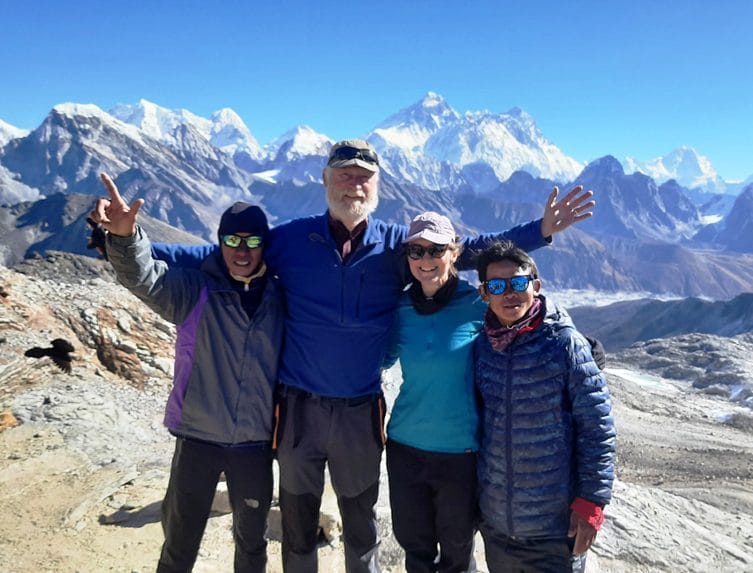
Goechala Trek in Sikkim: Trekking to the foot of Mount Kanchenjunga, the 3rd highest mountain in the world.
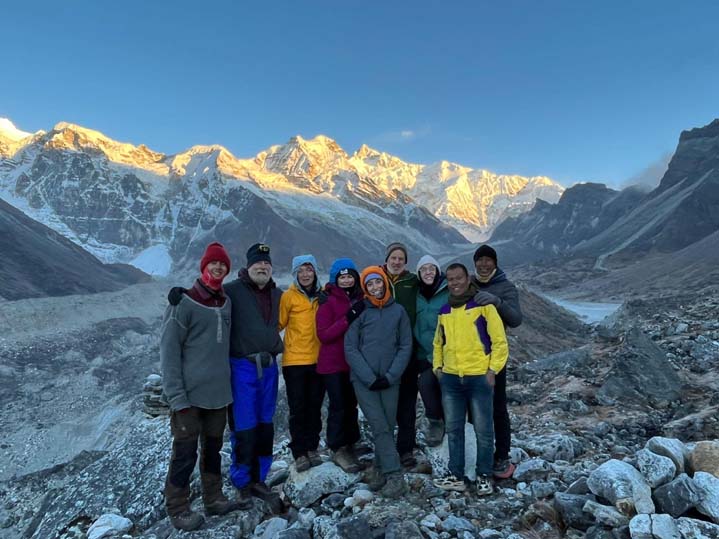
The Goechala Trek in Sikkim for an adventurer is a pilgrimage to the foot of the world’s 3rd highest mountain, Mt.Kanchenjunga. Sikkim’s star attraction, offering spectacular close-up views, and diverse landscapes of the Kanchenjunga National Park.
The Kanchenjunga Goechala Trek in Sikkim completely defies what most people expect from a trip to India. It’s an 8-day trek package through the Kanchenjunga National Park, the only “mixed” UNESCO World Heritage Site in India.
It is a challenging trek, totalling around 81 km in distance and a little above 4000 m of total elevation gain over 8 days, providing hikers with an abundant front-row seat to the breathtaking landscapes of the Kanchenjunga range.
The pristine nature of the trek in one of the least touristed parts of India, where every step offers awe-inspiring views of Mount Kanchenjunga, making the Goechala trek in Sikkim a favourite among hikers.
One of Sikkim’s popular trek packages, the Goechala trek offers a perfect balance between nature and endurance, and the brilliant view of Mount Kanchenjunga from the Goechala pass is out of this world.
So, if you are planning to explore the Kanchenjunga region in Sikkim, you should try the Goechala trek, and I know you will not regret it.
The Kanchenjunga Range in Sikkim is undoubtedly one of the spectacular trekking destinations in the eastern Himalayas, and within it lies the Goechala trek, which offers panoramic views of Mount Kanchenjunga and its famed peaks.
The highest point on this trek is the Goechala Pass viewpoint at 4719 m, offering magnificent sun-kissed views of the south-east face of Kanchenjunga, along with Pandim, Kabru, and a host of other 7000 m peaks.
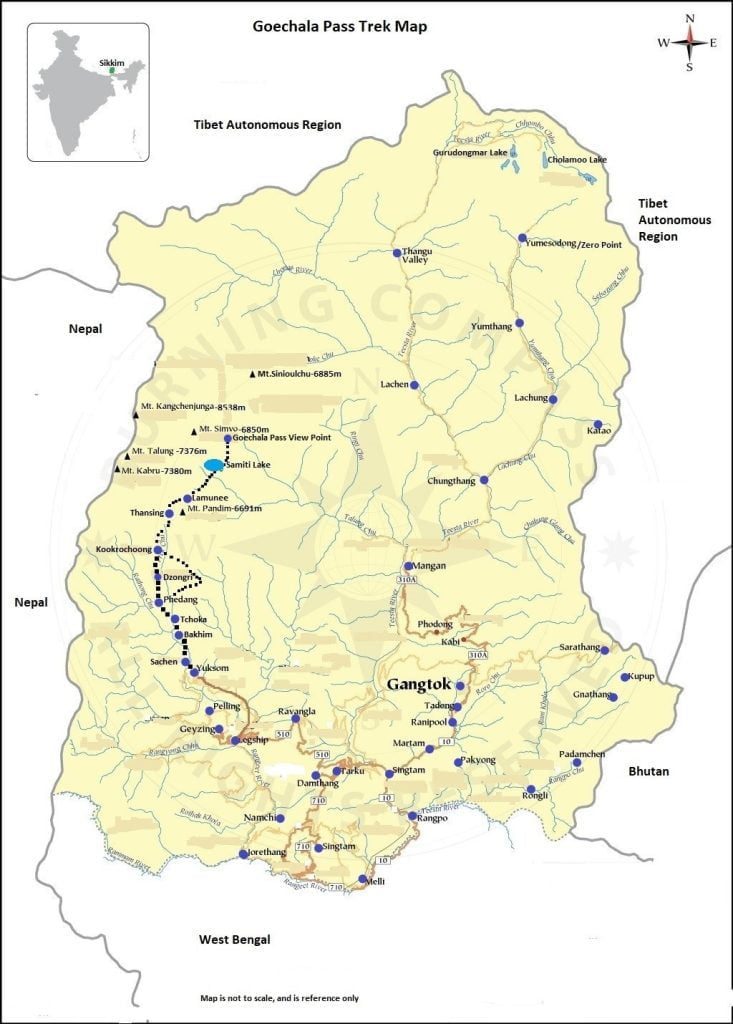
Starting in Yuksom village in West Sikkim, the 81 km trek route traverses the breadth of the Kanchenjunga National Park before reaching Goechala Pass just above Samiti Lake.
The most memorable aspects of this trek are the views of Kanchenjunga from Dzongri and Goechala Pass, as well as the diverse terrain it offers.
But be warned: the Goechala trek is a rugged camping trek in Sikkim with limited facilities and is not for those seeking the comforts of the civilised world. In the absence of modern facilities, be prepared for sub-zero temperatures once you trek into Dzongri and closer to Kanchenjunga.
The only warm place you will find is your sleeping bag and the kitchen tent.
But after you finish this trek, I know you will sing its praise, due in part to the million-dollar view of the Kanchenjunga range this trek presents. On a clear morning, the views of Mount Kanchenjunga and its range from Dzongri and Goechala viewpoints are unforgettable.
Trek Difficulty
The Goechala Trek is strenuous in Sikkim because of the continuous elevation gain of more than 1000 m on the first two days of trekking.
It’s a rugged camping trek inside the Kanchenjunga National Park that will test your physical and mental endurance.
The continuous ascent from Yuksom to Dzongri for two consecutive days is strenuous, but the view of Mount Kanchenjunga from Dzongri and Goechala pass viewpoints is spectacular.
The Goechala trek is not meant for every hiker because trekking to Goechala Pass (4719 m) needs stamina and experience, and you also have to be mentally fit to accomplish this trek in Sikkim, as there are variations in altitude from the first day of the trek.
But, if you are an advanced hiker looking for a stimulating trekking experience in India, then the Kanchenjunga Goechala Trek in Sikkim ought to be at the top of your bucket list.
This trek is sure to make an impression because of its breathtaking scenery and challenging trekking trail.
So, if you intend to trek in Sikkim, then trekking to Goechala Pass at the foot of Mount Kanchenjunga is a worthwhile experience.
Highlights: Spectacular View of Mount Kanchenjunga:
Dzongri View Point: Also known as Dablakhang (4171 m), the view of Kanchenjunga and nine other peaks more than 7000 m tall that the Dzongri View Point presents is synonymous with the grandeur of this trek in Sikkim.
Goechala Pass View Point (4719 m): As hikers make their way up to Goechala Pass, the majestic Kanchenjunga and its peaks emerge in all their splendour, providing a captivating background to the whole area. As you get nearer to Goechala Pass, each step offers an unparalleled 180-degree view of the snow-clad Kanchenjunga and its range.
Samiti Lake: Situated at an altitude of 4210 m above mean sea level, it is a glacial lake at the foot of Mount Pandim, en route to Goechala Pass viewpoint, and is also a holy lake for the locals of Sikkim. As the rising sun reaches its climax, the reflection of the mountain range on its icy surface is genuinely excellent.
The Starting and Ending Point
The Goechala Trek starts and ends in Yuksom in West Sikkim.
Yuksom is a little out of the way, and getting there isn’t easy. Yuksom is a four-hour drive from the state capital, Gangtok, and a six-hour drive from the nearest airport or train station, Bagdogra or New Jalpaiguri.
How to reach Yuksom
Yuksom is well connected by road, but does not have regular bus or taxi service either from Bagdogra Airport or New Jalpaiguri Railway station.
By Air, the nearest airport to Yuksom is Bagdogra Airport, located near Siliguri in West Bengal. From here you can reserve a taxi from the pre-paid taxi booth to reach Yuksom, and it will cost around US$85. The distance by road is 150 km and takes approximately 6-7 hours, depending on the traffic and the condition of the road.
By Train, the nearest major railway station to Yuksom is New Jalpaiguri (NJP) Railway Station, near Siliguri. From NJP, you can reserve a taxi directly to Yuksom, and cost around US$85 for a jeep or a luxury vehicle.
There is one Jeep Service (shared taxi) from Siliguri (15 Km from Bagdogra Airport) that will leave Siliguri in the afternoon for Yuksom, but is not reliable.
There are two regular jeep services from Jorethang mid-way between Bagdogra and Yuksom, that will leave for Yuksom in the afternoon. However, due to a lack of transport, these jeeps get filled very fast.
There are two Jeep services between Yuksom and Gangtok but are not reliable. So the best option is to reserve a private taxi and drive into Yuksom.
Best Season
The two best seasons for the Goechala Trek in Sikkim are the spring season from March to May and the Autumn season from September to November.
During the Spring season, the weather is crisp and cool, with mild temperatures making it suitable for trekking. The landscape around the Kanchenjunga National Park will also be decorated with multi-coloured Rhododendrons and wildflowers in bloom, creating vibrant, scenic views. Nighttime temperature will drop to freezing once you reach the Dzongri area.
But remember, as May approaches, the clouds from the approaching monsoon season surround the hillsides, and you may experience a little rain; therefore, bring an umbrella or a rain coat if plan the Goechala trek in May.
If you are looking for crystal clear views, then the autumn season is the best time for the Goechala Trek in Sikkim. During autumn, it is pleasantly cool with clear skies and minimal rainfall. The temperature may drop to freezing at night, but the daytime temperature will be just right for trekking. However, planning the Goechala Trek from mid-October to November is recommended.
During these months, the sky remains clear, and the view of the Kanchenjunga Range is the most panoramic, clear, crisp, and vibrant after the three months of monsoon rain. The excellent weather conditions and crystal-clear views of the Kanchenjunga range during the autumn season are ideal for photography and enjoying nature at its best.
Goechala trek in the winter months from December to February, the weather will be cold, with temperatures dropping well below freezing.
However, the snow-covered trekking trail and landscapes provide a serene trekking experience, offering a magical setting.
Trekking to Goechala pass during the winter months is more difficult due to heavy snow and cold temperatures after Dzongri.
The monsoon season starting from June to mid-September is not ideal for trekking inside Sikkim because of heavy rainfall.
Accommodation on the Trek
Accommodation on the Goechala Trek is limited to camping. There is only one basic trekkers’ hut each at Tchoka, Dzongri, and Thansing. These huts provide very basic facilities with dormitory-style accommodation with common bathroom.
Additionally, two small lodges in Tchoka are run by the tourism department. However, these are also quite basic and can become overcrowded during the peak trekking season.
We offer twin-share tent accommodations, complete with three-inch foam mattresses for each trekker. To support the group, there will also be a separate dining tent, a kitchen tent, and a toilet tent.
Food
The Goechala Trek in Sikkim, in the absence of tea houses, offers limited food options. A camp cook and their team will provide hikers hot, local meals throughout the trekking period.
Breakfast includes porridge, pancakes, bread with butter and jam, eggs, or the traditional Tibetan bread and puri (a type of fried flour bread).
Lunch offers hearty choices, such as macaroni, chapatis (flatbread) with vegetable curry, noodle soup, or chow mein, accompanied by boiled eggs or potatoes.
Evening tea or coffee with biscuits will also be provided on arrival at the campsite.
Dinner is mainly rice, dal (lentil soup), and vegetable curries, finishing with a cup of hot chocolate or tea.
While the menu may be limited, the camp cook and their team ensure that the food is freshly prepared, nutritious, and tailored to the needs of the trekkers. This attention to detail and the use of local ingredients contribute to a truly authentic Sikkimese dining experience on the Goechala Trek.
Religion
Different religions coexist in harmony in Sikkim. While Buddhism is the predominant religion, Hinduism and Christianity also have a significant presence.
The Buddhist influence in Sikkim is undeniable, with numerous monasteries and shrines dotting the landscape. The Tibetan Buddhist tradition is deeply rooted in the state’s culture, and the monasteries serve as centers of spiritual learning and community life.
However, Sikkim is also home to a sizeable Hindu population, who have their own temples and traditions. The two religions often intersect, with shared festivals and cultural practices. This religious diversity is a testament to the state’s inclusive and tolerant nature.
Furthermore, Sikkim has a growing Christian community, with churches and missionary activities present in various parts of the state. This religious pluralism is a defining feature of Sikkim, where people of different faiths live side by side, respecting each other’s beliefs and traditions.
The harmonious coexistence of these religions is a remarkable aspect of Sikkim’s social fabric. It is a shining example of how diverse faiths can thrive together, fostering a sense of unity and community in the state.
Power: Wi-Fi and Mobile Connectivity
After leaving Yuksom, electricity and cellular networks are non-existent. Therefore, charge your camera and phone batteries before departing Yuksom. You can also bring along a solar charger to help you charge up your phone battery, but relying solely on it is not recommended, as weather conditions can be unpredictable in the mountains. Bring along high-capacity battery banks too so that you do not go out of juice for your camera phones.
As for free WIFI, hotels in Gangtok or in other major towns in Sikkim provide free WIFI to their in-house guests. While in Yuksom, some lodges and a few restaurants provide free Wi-Fi, provided you use their services.
Except for the trekking trail inside the Kanchenjunga National Park, Sikkim is well connected by mobile network. So if you have a SIM from your country and have activated International roaming, then you can make calls from your phone.
It’s also important to note that the use of satellite phones is prohibited in India. Attempting to bring one on the trek could result in legal issues, so it’s best to leave these devices at home.
Language
Sikkim is a multilingual state, and Nepali is the most prominent language spoken, written, and understood by all. Additionally, English and Hindi are widely spoken and understood as well.
So, you need not worry if your Nepali skills are lacking or if you don’t know the local language. The grocery shop owners, tea sellers, taxi drivers, and even the support team on the Goechala Trek will all be able to understand and assist you.
However, learning a few basic Nepali words and phrases can greatly enhance your experience in Sikkim. Words like “Namaste” (hello), “Dhanyabad” (thank you), “Ramro Cha” (very nice), “Khanchu” (I will eat), and “Dammi” (very tasty or nice) can go a long way in connecting with the local people. While Bhutia, the language of the majority Sikkimese people, is also spoken, it is more restricted in usage.

In India, power plugs and sockets (outlets) of type C, type D and type M are used. The standard voltage is 230 V at a frequency of 50 Hz. Yes, you need a power plug travel adapter for sockets type C, D and M in India.
The Type D connector is the most common and features a unique three-pin configuration, with two flat parallel pins and a round grounding pin. Its widespread use makes it essential to have the right adapter or converter to seamlessly integrate your devices into the Indian electrical system.
Does a two-pin mobile charger with an EU plug suit Indian sockets?
Yes. EU two-pin plug will definitely fit, even a three pin socket will also fit. But remember, it will not be grounded, because the ground pin on the EU pin is just opposite. Even the Italian two-pin will fit but not the three pin.
If you live in the United Kingdom, you need a power plug travel adapter for sockets type C, D and M in India. The plugs of your electric devices don’t fit without.
If you are visiting India from the US then you will need to bring a suitable plug adapter to fit a US plug into an Indian power outlet. As the voltage is different in India use a power converter if your device or appliance isn’t dual voltage and ensure that it can work with a 50hz power outlet.
The United States have plugs A and B. You need a power plug adapter in India for sockets type C, D and M.
What should I carry for this trek?
We recommend you bring a haversack of capacity 50 l–55 l with waterproof covers, or a waterproof duffle bag, as it will be easy for the porters or the ponies to carry them. Put in all your clothes, and a sleeping bag that you will require for the duration of the Goechala Trek in it.
Bring with you a down sleeping bag that can withstand a temperature of minus 15 degrees Celsius, along with a thermal inner. This will ensure that you will have warm nights.
Also include a small bag with a lock. Put in this bag clothes and things that you do not need for the trek, and pass it on to us. We will keep this with us in safe custody, and will pass it on to you after you return to Yuksom at the end of the Goechala Trek.
Day Pack
Also, bring a daypack for your personal use for daytime trekking. The day pack should be large enough to hold a water bottle, a raincoat or umbrella, a windbreaker, a light fleece jacket, your personal items, dried fruits or energy bars, and a personal medical kit, sun-shades, and dark glasses.
Include in your medical kit tablets for fever, dysentery, anti-acid tablets, Electral powder, and painkillers. Include in it Crepe Bandages for sprains, Antiseptic Ointment for cuts and bruises, Band-Aids for small cuts and toe blisters, water-purifying tablets, sunscreen lotion, and Vaseline for chaffed skin.
Clothing for the Trek
As you will be ascending to high altitude, the temperature in the evening and night will vary from 0 to 5 degrees. Therefore, carry warm clothing with you. Include a down jacket, a couple of fleece jackets, woolen socks, gloves, a balaclava, and thermal inner wear for evening and nighttime use.
Daytime temperature will remain between 5 and 18 degrees Celsius. Therefore, light and loose trekking pants and fast-drying T-shirts should be included in your pack.
Get proper, supportive socks. Get socks that are designed for trekking and hiking long distances. These socks are well worth investing in to give your feet extra protection.
Hiking Boots
A pair of ankle-length sturdy but light trekking boots is a must on this trek, as the route is rough and uneven. If it is a new purchase, then it is essential to break them in before using them on the trek to ensure that they are comfortable. Carrying an extra pair of trail running shoes is also a good idea in case of discomfort.
ATMs
There are no ATMs in Yuksom, nor are there any Banks.
Pelling, 41 km & 1:30 hour drive from Yuksom, is the nearest town which has an ATM and a Bank where you can withdraw Indian currency using your Master Card or Visa Credit or Debit Card. But do not depend for your currency needs on this ATM.
Gangtok has numerous ATMs; therefore, withdraw enough trek funds here rather than regret later. You can withdraw Indian Rupees forty thousand a day on your Visa or Master Card Credit or Debit Card.
What is the booking procedure?
You will have to deposit an advance amount to book and confirm your place in the Goechala Trek. Once we receive the advance amount, we will consider the trek booked and confirmed. Once you decide to join this trek with us, we will send you bank information to make your deposit.
Cancellation Policy
- Minimum Charge: (The deposit amount will not be refunded if the trek is canceled due to government policy, closure of national parks, etc., or canceled by the depositor himself.)
- Less than 7 days of trek date: 50% of trek cost.
- On or after the trek start date: No refunds if the trek is aborted or shortened for any reason.
Formalities for Entering Sikkim
Foreign visitors wishing to enter Sikkim for trekking and hiking will have to obtain an Inner Line Permit (ILP). The Inner Line Permit is readily available at Sikkim House in all major cities in India and also at the entry points at Melli Check Post and Rangpo at the border with West Bengal.
You will need to fill out a form with the visitor’s details and a xerox copy of the passport and Indian visa, along with two passport-sized photos that have to be submitted.
ILP will be granted for 30 days. However, we will assist you in this matter.
Trekking Permit
Hikers and trekkers wanting to do the Sikkim Goechala Pass Trek will have to go through a registered travel agency in Sikkim.
A trekking form along with the xerox copy of the passport, Indian visa, and ILP, accompanied by four passport photos, will have to be submitted to the Tourism Department, and then the trekking permit will be granted. But you do not have to worry; that is our responsibility.
I am a single trekker; what should I do?
We have fixed group departure dates for Solo Hikers, and you can join a group of trekkers leaving for the Goechala Trek. The itinerary can also be customized for a minimum of two people on a date of your choice.
Talk to us if you have any doubts. Our experienced outdoor adventure team is always ready to help you plan your treks and tours in Sikkim. Our team will assist you throughout the whole process, from the moment you decide until you return from the trek.
EMERGENCY EVACUATION
Emergency evacuation in case of emergency on the Goechala Trek in Sikkim is challenging due to its remote location, high altitude, rugged terrain, and unpredictable weather conditions.
Moreover, the absence of mobile network and the ban on the use of satellite phones make evacuation even worse. The only option is to carry the sick down to Yuksom, which has a basic medical facility.
Helicopter services in Sikkim are limited and unpredictable due to the lack of civilian helicopters operating in the region. There is only one helicopter service, which is unreliable.
Moreover, the landing permission to land at Dzongri has to be procured from the Defence Ministry, and this may take a minimum of 48 hours, adding to the woes.
Costs for heli-rescues range from $5,000 to $15,000, often covered only by comprehensive insurance, and the limited availability of these helicopters causes delays during peak seasons.
The lack of road connections deep into Kanchenjunga National Park means that reliance on porters, yaks, or human carriers is initially necessary.
Therefore, the best available option is to carry the sick down on make shift stretcher, or doko-style cane basket with the help of porters and other staff members, if unable to walk. If the sick can still walk, then after preliminary first aid, descend immediately to lower altitude.
Runners also trek down to a point where the mobile network is available, and call for help from the nearest rescue point, that is Yuksom.
PREVENTION
Slow ascent, hydration, monitoring SPO2—avoids most needs. Real cases show that foot descent is the default when helicopter evacuation fails, highlighting why only fit, experienced trekkers attempt this strenuous route.
CONCLUSION
In short, the Goechala Trek in Sikkim is one of India’s best high-altitude treks, less commercial, brutal at times, but extremely rewarding. It is physically exhausting—but also very “soul-rewarding,” as many trekkers describe.
Not only the views of Kanchenjunga, but also the landscapes on the Goechala Trek constantly change from dense tropical forests to lush rhododendron valleys, alpine meadows, and glacial valleys.
The sunrise from the Dzongri and Goechala Pass viewpoints is the highlight of this trek, with the golden light hitting the legendary peak of Kanchenjunga.
So, if you’re willing to push yourself, then the Goechala Trek in Sikkim is the one for you, as it gives you something rare: a front-row seat to Kanchenjunga without extreme expedition-level risk.
Goechala Trek Route and Itinerary
The Goechala Trek route is known for its scenic beauty and diverse landscapes. Here’s a detailed breakdown of the trek route:
Overview
- Location: Sikkim, India
- Total number of days: 13 days
- Trekking Duration: Typically 8 days
- Difficulty Level: Moderate to Difficult
- Maximum Altitude: 15, 478 feet (4,719 meters) at Goechala Viewpoint 1
- Best Time to Visit: Late March to May and September to November
- Accommodation on the Trek: Tent
- Minimum Number of Participants: 2 Persons.
- Highest Camp Site: Lamunee (4164 m).
- Starting and Ending Points of the Trek: Bagdogra Airport or New Jalpaiguri Rail Station
- Trek Availability For Solo hikers: We have group departure trek dates shown below. Solo Hikers can join a Group Trek to Goechala.
- Customized private treks can also be arranged for a minimum of two people on request on a date of your choice.
| Group Departure Dates for Solo Hikers: Join a Group for the Goecha la Trek 2026 | ||
| 17-29 March,2026 | 12-24 May,2026 | 27 Oct-08 Nov 2026 |
| 31 March–12 April 2026 | 22 Sept-04 Oct, 2026 | 10-22 Nov,2026 |
| 14-26 April,2026 | 29 Sept.–11 Oct. 2026 | 17–29 November 2026 |
| 28 April–10 May 2026 | 13-25 Oct,2026 | |
| Group Departure Dates for Solo Hikers for the Goechala Trek 2027 | ||
| 16-28 March,2027 | 11-23 May,2027 | 26 Oct-07 Nov, 2027 |
| 30 March–11 April 2027 | 21 Sept-03 Oct, 2027 | 09-21 Nov,2027 |
| 13-25 April,2027 | 28 Sept.–10 Oct. 2027 | 16-28 Nov,2027 |
| 27 April–09 May 2027 | 12-24 Oct,2027 | |
Day-by-Day Itinerary
Day 01: Arrive at Bagdogra Airport/NJP Rail Station/Nepal Border. Drive to Gangtok (1622 m) on the 5-hour drive. Overnight at the hotel.
Day 02: A day in Gangtok. Overnight at the hotel (B/B only).
Day 03: Drive to Yuksom (1760 m/5 hours). Overnight at Hotel/Lodge (B/B only).
Day 04: Goechala Trek Starts. Trek from Yuksom to Bakhim (2744 m). Overnight Tent.
- Distance: 10.35 km
- Trekking Time: 6 Hours
- Elevation Gain: 984 m
- Max Elevation (Bakhim): 2744 m
- Yuksom to Sachen: (2185 m/7 km)-Gradual Trek with a little up and down at places.
- Sachen to Bakhim: (2744 m/3.35 km)-First 2 km is a gradual trek; after crossing the suspension bridge over the river Prekchu is a steep uphill trek of 2 km till Bakhim.
From Yuksom, the first 9 km trek starts gently on a narrow trekking trail through dense forests and small uphill climbs at places until you reach the banks of the river Prekchu. Here you will cross a long suspension bridge, and immediately the 2 Km uphill trek to Bakhim starts.
The 2Km trekking trail is rough and uneven through dense forest till Bakhim, our campsite for the first night. For an average trekker, this eleven-kilometer trek from Yuksom to Bakhim can take up to six to seven hours.
Please Note: In order to get acclimatized properly, it is also advisable to halt for the night at Sachen (2189), seven kilometers from Yuksom.
Day 05: Trek Bakhim to Dzongri. Overnight in a tent.
- Distance: 11.27 km
- Trekking Time: 6 Hours
- Elevation Gain: 1286 m
- Max Elevation (Dzongri): 4030 m
- Bakhim to Tchoka (3000 m/2 km/1 hour)-Gentle uphill Trek.
- Tchoka to Phedang (3496 m/3.27 km/3 hours): Steep uphill on a very rough trail.
- Phedang to Derali Dara (3920 m/2 km/2 hours): First 45 minutes through Rhododendron Forest on a level track. Then a steep uphill on a barren hillside till Deorali Dara.
- Deorali Dara to Dzongri Hut (3950 m/2 km/1 hour): Easy trek on a wide trail.
- Dzongri Hut to Dzongri Camp Site (4030 m) – 2 km: Easy Trek till the campsite.
Trekking to Dzongri from Bakhim is an 11.2 km uphill hike amidst the magical oak, rhododendron, and Magnolia forests of Kanchenjunga National Park. Starting with a gentle two-kilometer uphill trek till Tchoka, a former Tibetan settlement with a trekker’s hut, a monastery, and two small lodges.
The trail from Tchoka then ascends steeply on a rough 6-kilometer track to Phedang and then continues the uphill climb right up to Deorali Dara.
From here on, the trek to Dzongri is a gentle one with no uphill and with spectacular views of the Kanchenjunga Range and the Silver Fir and Rhododendron forests being replaced by small Cryptomeria bushes.
Day 06: Rest Day at Dzongri. Early morning climb to Dzongri View Point for the morning views of the mountain range. Optional day hike to Dzongrilla Pass or Laxmi Pokhari. Overnight in a tent.
The early morning trek to Dzongri View Point, or Dablakhang (4171 m), is worth the one hour of the climb as you get to witness the most beautiful sight of some of the tallest mountains in the Himalayas, all above 7000 m in height. This is what the Goechala Trek is all about: getting intimate with some of the highest mountains in the world.
Day 07: Trek Dzongri to Thansing (3932 m). Overnight in tents.
- Distance: 7 km
- Trekking Time: 4 Hours
- Elevation Loss: 98 m
- Max Elevation (Thansing): 3932 m
- Min Elevation (Kookrochoong): 3658 m
- Dzongri to Kookrochoong (3658 m/4 km/2 hours): first 2 km on a slightly downhill trail. Then a steep downhill trek on a loose stone trail to Kookrochoong.
- Kookrochoong to Thansing (3932 m/3 km/2 hours): 1 km is beside the river, and then a slight uphill till Thansing.
Trekking from Dzongri to Thansing is a wonderful experience. This trek route winds through the Cryptomeria shrubs and provides an awe-inspiring view of the surrounding mountains. The trek from Dzongri to Lamune is undoubtedly the best part of the Goechala Trek. With the Himalayan peaks in the background, the trek provides an opportunity to be close to these majestic peaks.
The only difficult part of this trek is the 2 KM downhill trek to the riverbed at Kookrochoong. Other than that, the route is quite easy and can be navigated with ease. The whole Thansing valley is situated at the foot of Mount Pandim and surrounded by high mountains on all sides. Trekkers can enjoy all the natural beauty of the mountains and the lush greenery in the region. Overnight stay in tents in the Thansing Valley at the foot of Mount Pandim is another major highlight of the trek.
Day 08: Trek Thansing to Lamune (4164 m/3.8 km/2-3 hrs). Overnight in tents.
- Distance: 3.8 km
- Trekking Time: 2 Hours
- Elevation Gain: 239 m
- Max Elevation (Samiti Lake): 4210 m
- Thansing to Lamune (4164 m/3.8 km/2-3 hours): easy trek on a wide trekking trail with no uphill trek till Lamune.
- Elevation Gain: 217 m
Day 09: Trek to Goechala Pass View Point 1 (4719 m). Return Trek to Kookrochoong (3658 m/14 km). Overnight in the tent.
- Total Distance: 14 km
- Trekking Time: 8 Hours
- Elevation Loss: 503 m
- Max Elevation (Goechala Pass View Point 1): 4719 m
- Min Elevation (Kookrochoong): 3658 m
- Lamune to Samiti Lake (4210 m)-2 km-Slight uphill on a rough moraine.
- Samiti Lake to Goechala Pass View Point 1 (4719 m approx)-2 km uphill Trek.
- Lamunee to Thansing- 3.8 km-Easy slightly downhill trek
- Thansing to Kookrochoong-3 km- Downhill Trek
Trekking to the Goechala Pass View Point is one of the most thrilling experiences you can have. This trek starts at 4 a.m. and is the longest, with almost 14 km to cover (Round Trek). The Goechala Pass viewpoint is situated at an altitude of 4719 m ( 16,000 feet) and offers a spectacular 180-degree view of the Kanchenjunga Range and that of the Onglathang glacier.
The trek is filled with adventure, as you have to cross the sacred Samiti Lake at 4210 m before reaching the Goechala Pass viewpoint. The trek is a little strenuous and requires a certain level of physical fitness. From the viewpoint, you can witness the mesmerizing sunrise on the snow-clad peaks of the Kanchenjunga Range.
After spending some time soaking in the breathtaking views, you will make your way back to the campsite at Lamunee for breakfast. After a well-deserved rest, you will head down the Thansing valley in a leisurely manner and camp for the night at Kookrochoong.
Day 10: Trek Kookrochoong to Tchoka (2975 m/9.55 km). Overnight in tents.
- Distance: 9.55 km
- Trekking Time: 6 Hours
- Elevation Loss: 683 m
- Max Elevation (Kookrochoong): 3658 m
- Min. Elevation (Tchoka): 2975 m
- Kookrochoong to Phedang (6 km/4 hours): easy trek through the forest.
- Phedang to Tchoka (3.55 Km/2 hours): Steep Downhill Trek on a rough track till Tchoka
The trek to Tchoka from Kookrochoong is perhaps the easiest part of the Goechala Pass Trek in Sikkim. This trek route, the best trek route in India, is a paradise for nature lovers, boasting thick rhododendron and pine forests. With only a few uphill stretches until Phedang, where lunch will be served, the day’s trek is a great way to enjoy a leisurely hike in Sikkim.
After lunch at Phedang, the trek to Tchoka is a downhill journey, retracing the same path we took while climbing up to Dzongri. The downhill trek is a great way to relax and appreciate the nature around you as you make your way to the campsite at the end of the day. This part of the trek route gives a great opportunity to observe the lush green forests and vivid fauna of the Sikkim Himalayas.
Day 11: Trek Tchoka to Yuksom (1760 m). Lodge (B/B only).
- Distance: 11.27 km
- Trekking Time: 6 Hours
- Elevation Loss: 1215 m
- Max Elevation (Tchoka): 2975 m
- Min Elevation (Yuksom): 1760 m
Trek back to Yuksom on the same trail that you took while going up.
Day 12: Drive to Kalimpong (1200 m/4-5 hour drive). Hotel (B/B only)
Day 13: Drive to Bagdogra Airport, NJP Rail Station, or Nepal for the final departure. End of Sikkim Goechala Trek: 3-hour drive.
The extension can be made to Darjeeling, Bhutan, and Nepal.
How much does this trek cost?
- Cost: US$1040/Person
- Cost for Indian Nationals: Kindly request a quote in Indian Rupee
Kanchenjunga National Park Fees (Extra applicable):
- Fee for Foreign Nationals: Rupees 500 per person x 8 Days = Rupees.4000 (US$43 depending on the exchange rate).
- Fee for Indian Nationals: Rupees.200 per person x 8 Days = Rupees.1600.
- Camping Fees ( Foreign & Indian Nationals): Rupee.200 x 8Days = Rupees.1600 (US$17 depending on the Exchange rate).
Fees for Camera and Filming:
- DSLR Camera: Rs.200 per entry.
- Video Camera (GoPro): per entry: Rs.1500
- Drone Camera: per entry: Rs.2500
- Filming (Domestic): Rs.20,000
- Filming (Foreign): Rs.30,000
What is Included and Excluded in the Goechala Trek Cost?
GOECHALA TREK COST INCLUDES:
- Twin-share tent with a mattress during camping or trekking.
- Hotel accommodation: twin share, including breakfasts.
- Fully organized trek services with a guide, porters, and camping equipment.
- All fixed three meals every day during trekking or camping.
- All road transport is as per itinerary by luxury vehicle with a maximum of three persons in one vehicle.
- Service of an English-speaking guide.
- Entrance fees to monuments visited.
- All Permits for Darjeeling and Sikkim.
DOES NOT INCLUDE:
- Kanchenjunga National Park Entrance Fees
- Sleeping bag; personal clothing or equipment.
- Lunches and dinners during hotel stay
- Bottled or alcoholic drinks.
- Tips, client insurance, and evacuation costs.
- Any expenses of a personal nature.
Note: The above given itinerary is a sample, intended to give you a general idea of the likely trip schedule. Numerous factors, such as weather, road conditions, the physical ability of the participants, etc., may dictate itinerary changes either before departure or while on the trail. We reserve the right to change this schedule in the interest of the trip participant’s safety, comfort, and general well-being.
A customized itinerary can also be prepared as per your convenience.
(All relevant terms and conditions apply).